
Trades
Search
Trades
Search
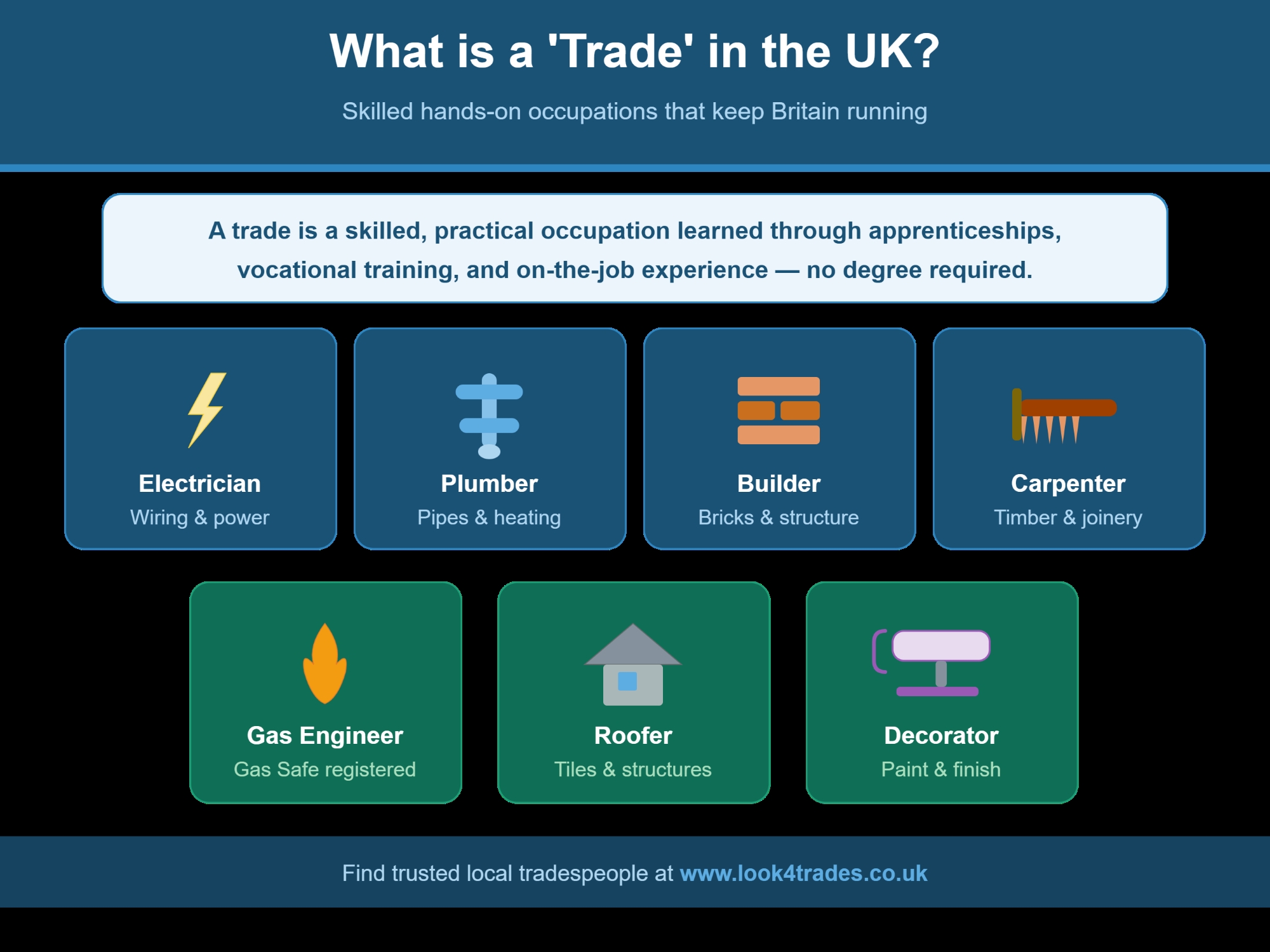
Whether you’re a homeowner searching for a reliable professional or someone considering a career change, understanding what is meant by a ‘trade’ in the UK is a great place to start. In 2026, tradespeople remain the backbone of British homes, businesses, and infrastructure — and demand for their skills has never been higher.
Whether you’re a homeowner searching for a reliable professional or someone considering a career change, understanding what is meant by a ‘trade’ in the UK is a great place to start.
In 2026, tradespeople remain the backbone of British homes, businesses, and infrastructure — and demand for their skills has never been higher.
In the UK, a ‘trade’ refers to a skilled occupation that typically involves practical, hands-on work rather than office-based tasks. Trades are generally learned through a combination of formal training, apprenticeships, and on-the-job experience. Unlike professions that require a university degree, tradespeople develop their expertise through vocational qualifications such as NVQs, City & Guilds, or BTEC certifications.
Some of the most widely recognised trades include:
Some trades in the UK are legally regulated to protect public safety. For example, gas engineers must be registered with the Gas Safe Register, and electricians carrying out notifiable work must comply with Part P of the Building Regulations. When hiring a tradesperson in 2026, always check for relevant certifications and memberships with bodies such as NICEIC, NAPIT, Gas Safe, or TrustMark.
Tips for Hiring a Tradesperson in the UK
Whether you’re looking to hire or considering entering a trade yourself, the UK’s skilled trades sector offers excellent career prospects and earning potential. With a shortage of skilled workers continuing into 2026, there has never been a better time to value and invest in the trades.